The Drawer Nobody Opens: Why Your Rejected Work Is the Most Honest Thing in Your Portfolio
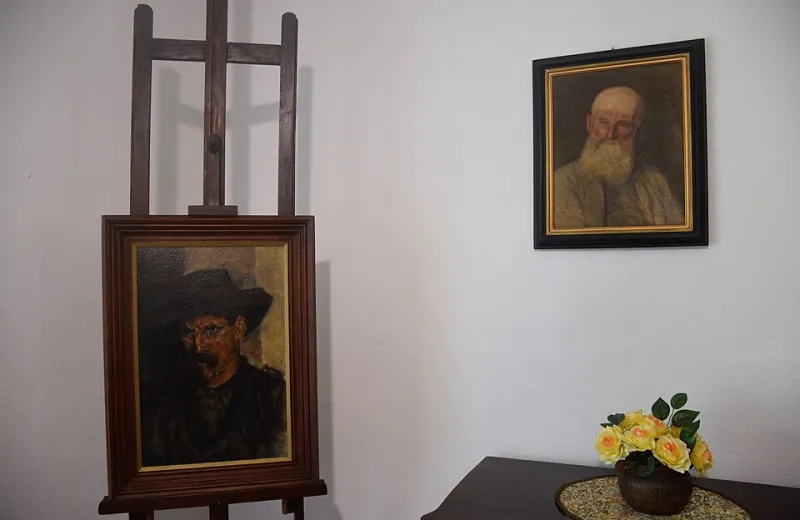
Photo: Silar, CC BY-SA 4.0, via Wikimedia Commons
A few years back, a client asked me something I wasn't ready for. We were deep into a project kickoff call, going through the usual pleasantries, when she said: "Can I see everything? Not just the finished stuff. The stuff that didn't work too."
I laughed a little. Nervous laugh. The kind that buys you three seconds to figure out what you actually want to say.
Because here's the thing — nobody asks that. Clients ask for your best work. They ask for relevant experience. They ask for case studies with clean before-and-afters. They don't ask to see the version of the logo that looked like a confused pretzel, or the website layout that your own mother said felt "a little off."
But she did. And showing her changed something about how I think about creative work entirely.
The Polished Portfolio Problem
Most of us build our portfolios like highlight reels. We curate. We edit. We show the wins, the pivots that worked, the projects that landed exactly where we aimed. It makes sense — you're trying to get hired, not confess.
But there's a cost to that approach that doesn't show up until later.
When everything in your portfolio is perfect, clients come in expecting perfection. They don't understand that the clean final product they're looking at took eleven rounds of iteration, three complete direction changes, and one very uncomfortable phone call where you told the last client their initial idea wasn't going to work. They just see the result. And they expect you to replicate it — smoothly, quickly, without the mess.
That gap between expectation and reality is where a lot of creative relationships fall apart.
What Rejected Work Actually Demonstrates
Showing your process — including the parts that didn't pan out — does something quietly powerful: it proves you think.
Anyone can produce a polished final product. What's harder to fake is the evidence of real decision-making. When a client sees the version of your work that you killed, and you can explain why you killed it, they're not seeing failure. They're seeing judgment. They're seeing the exact thing they're actually paying for.
There's a reason design schools make students present their process work alongside their finals. It's not about humility. It's about demonstrating that the outcome wasn't an accident.
The rejected stuff is the receipts.
Trust Gets Built in the Uncomfortable Places
Vulnerability has a bad reputation in professional settings. We're taught to project confidence, to lead with strength, to never let them see you sweat. And sure, there's a version of that advice that's useful.
But there's another version that just makes you seem like a machine. And nobody wants to hire a machine they can't talk to.
When I finally pulled up those old rejected drafts for that client — the ones I'd half-convinced myself were embarrassing — something shifted in the room. Or on the Zoom, rather. She leaned in. She started asking questions. Real ones, not just due-diligence ones. She wanted to know what I was thinking when I made certain choices, what made me abandon one direction for another.
By the end of that call, she wasn't just confident in my ability to do the work. She trusted that I'd be honest with her when something wasn't working. That's a different kind of confidence, and it's worth a lot more.
The Experiments That Flopped Are the Ones That Taught You Something
Here's an uncomfortable truth: your best current work exists because of the stuff that failed before it.
That weird typographic experiment you tried three years ago that never went anywhere? It taught you something about spacing that you now apply instinctively. The client project that went completely sideways because you didn't push back early enough? You haven't made that mistake since.
Your rejected work isn't separate from your expertise. It is your expertise. It's the tuition you paid.
Showing some of that — selectively, with context — lets potential clients understand that your skills aren't just talent. They're earned. There's a difference, and the ones worth working with know it.
How to Actually Do This Without Torpedoing Your Reputation
Okay, so showing your rejected work sounds great in theory. In practice, it requires some thought.
You're not posting your worst day on Instagram and calling it vulnerability. You're being strategic about what you surface and how you frame it.
A few things that actually work:
Lead with the lesson, not the failure. Don't present rejected work as "here's something that didn't work." Present it as "here's a direction I explored and what I learned from killing it." That framing keeps you in control of the narrative.
Show iteration, not incompetence. There's a difference between early-stage exploration and just bad work. Version two of a concept that eventually became something great? That's process. A project you delivered that the client hated because you didn't listen? Maybe keep that one in the drawer.
Pick the right audience. Not every client wants this level of transparency. Some just want to see finished work and move on. Read the room. The clients who ask questions, who seem genuinely curious about how you work — those are the ones who'll appreciate the full picture.
Make it searchable. If you have a personal site, consider a section for process work or case studies that go behind the scenes. It doesn't have to be everything. Even one or two deep-dives that show your thinking can reframe how potential clients see you before they even reach out.
The Work You Hid Might Be the Work That Gets You Hired
There's something almost counterintuitive about all of this. In a world that rewards polish and punishes anything that looks like a stumble, being willing to show the stumbles — even a few of them — is actually a differentiator.
Most creators are too scared to do it. So the ones who aren't stand out.
That client who asked to see everything? She hired me. And she referred two other clients who were exactly like her — curious, collaborative, not interested in hiring someone who pretended the work arrived fully formed.
The drawer nobody opens might be the most honest thing you've got. Maybe it's worth cracking it open a little.